
How to tell real leather from fake
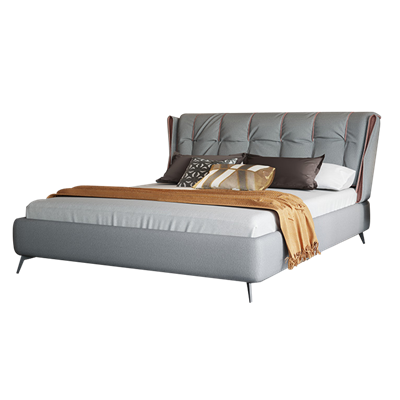
There is a lot of leather furniture on the market now, from sofas to accent chairs, and not all of it is the real thing. To be sure you are paying for genuine leather, it helps to know a few simple tests. Here are the ones we use.
Touch
Run your hand over the surface. Real leather feels smooth, soft, full and slightly elastic. PVC and other synthetic leathers feel drier and stiffer, with little give. When you are shopping for a leather sofa, this is the first and easiest check.
Look
Real leather shows distinct pores and grain. Cowhide has fine, evenly spaced pores. Yak hide has coarser, sparser pores. Sheepskin has pores arranged in a scale-like pattern. A synthetic surface has a printed pattern that repeats and looks too regular.
Smell
Real leather smells like leather. Synthetic leather has a sharp plastic or chemical smell.
Burn test
Pull a few fibers from the back of the material somewhere hidden and light them. Synthetic leather gives off an acrid smell and melts into a hard lump. Real leather smells like burning hair and does not form a hard bead. Many sofa makers claim to use genuine leather; this test settles it.
Water test
Real leather absorbs water; imitation leather repels it. Wet a fingertip and rub it on the surface. If the water soaks in, it is leather. If it beads up or barely soaks in at all, it is almost certainly synthetic.